
Overview: ‘Refinement’ processes. First principles thinking requires circling back to the underlying axioms (and presumptions). Theoretical : Honing the approach to the nascent ‘Immersion Intensity & Plasticity Scale’, looking at conceptual decomposition methods to derive the framework sections. Also asking in general the questions of ‘what beneficial human traits can we nurture’ via immersion. Technical : The preservation and enhancement of artistic process within the heavy mediation of technical tools, and the defining of directorial and structural issues around designing for contemplative spaces and the sense of passage/threshold.
Month: April 2026
Media: VR
PhD Stage: Year 2
Key Themes: Awe, liminality, ritual aesthetics, spatial presence
Category: Research Practice
Research Question: How can immersive environments be composed to support awe and transformative reflection?
Project Strand: 6DoF Development. Immersion Intensity & Plasticity Scale
Output: VR Rushes. Theoretics
Practice
Theoretical: Lit reviews and conceptual decompositions to develop my own map of the terrain.
Practical: Going deeper into manipulating 3DoF and 6DoF immersive worlds.
Experiments and Iterations
Moving from Fixed POV 360° Film (3DoF) to 3D Mesh VR (6DoF)
Desiring the ability to navigate around scenes actively, rather than unfolding panoramas that are passively experienced, I am running tests on translating paintings and sketches into 3d meshes and splats as I pursue the idea of ‘digital temenos’ or sanctums. Aesthetics take a hit. There is a potential sacrifice of atmosphere/artistic vision/style fidelity in this translation that as an artist I am uncomfortable with. The approach of scripting meaning and composing sequences is a completely different between 3DoF and 6DoF due to users in 6DoF being able to go ‘off piste’ and also become more engaged with the cognitive load of locomotion through the environments rather than passive experience or diegetic and subliminal choice architectures coming from attention or biometrics.
Artefacts and Documentation
Technical and Process Notes
3DoF vs 4Dof
Experimenting with pushing further from 3DoF (DOF : Degrees of Freedom) into 6DoF. Though I feel it may be a distraction as the literature points to the effectiveness of the more passive mode of 3DoF:
“Within VR interventions, participants in fully immersive settings follow relatively simple operational procedures: they primarily attend to the audio guidance of a virtual instructor and immerse themselves in the virtual environment. This process facilitates attentional anchoring rather than frequent switching, the cognitive load on learners is relatively low, thereby enhancing present-moment awareness. For beginners, such straightforward engagement also helps mitigate potential anxiety about technology. In contrast, the active interactive mode requires participants to allocate attentional resources to managing hand controllers, navigating between scenes, and performing multiple tasks simultaneously. These additional demands can interfere with perceptual awareness and hinder sustained focus on breathing and bodily sensations, the cognitive load imposed on learners is considerable. Such divided attention runs counter to the core principle of mindfulness practice, which emphasizes non-judgmental and effortless awareness of the present moment.”
– Xie, F., et al. 2025. “The Effectiveness of Virtual Reality in Enhancing Mindfulness: A Systematic Review and Meta-Analysis.” Frontiers in Public Health 13.
Critical Reflection
Slowness & Passivity as Features not Bugs
Self Regulation and accomodation windows can be accessed through repeated ‘small awe’, not only big awe. In the limited view of designing overwhelming spectacle, much immersive art seems concerned with sensory barragement, instead of quieter experiences of being in environments of aesthetic and contemplative nourishment.
Could temenos arranged around curiosity, intrigue, discovery be an alternative paradigm to conflict, problem or puzzle solving. could environments based around small awe, sense of presence and sense of place, for the purposes of self-regulation be designed, first through soliciting ‘how do you feel’ (or biometric sensing) that then calibrates the nature of the experience in the temenos?
Datapoint- one of the most satisfying places I have identified to ‘be’ in the Metaquest ecosystem in VR is simply the picturesque immersive camping-site desktop, except nothing happens. Encounters with mythological beings, teachers and meditation practices within such effective environments would be appealing and engaging.

Immersion Intensity & Plasticity Scale – Is it a valid metric or a descriptive and design heuristic?
Steel-manning the IIPS has lead me to offer it as a design heuristic framework (the IIPF) rather than a scale. Research to derive dimensions of the framework via literature review is ongoing (continuing below under ‘research development’)
Research Development
Altered Traits: Where is the Evidence
Immersive systems can quite plausibly induce short-horizon shifts in attention, mood, perspective, felt presence, and symbolic receptivity. What they do much less securely is remake personality or moral character in any durable sense. That distinction matters because too much discourse around VR still slips from “this medium can intensify experience” to “this medium can cultivate virtue,” and the evidence does not yet justify that larger leap. [Chirico et al. 2024; Jongbloed et al. 2024; Xie et al. 2025]. (Nature)
Where VR appears strongest is in pedagogy and skill acquisition, when the learning target is spatial, procedural, embodied, or difficult to rehearse safely in ordinary settings. Systematic reviews report positive learning effects for immersive VR in education and training, with strong support for immersive procedural training and knowledge transfer. Immersion can provide a structured situation for rehearsal, manipulation, and embodied cognition. VR is especially credible when it helps people do, perceive, and remember something more effectively. (Conrad et al. 2024; Jongbloed et al. 2024).
A second domain is self-regulation. VR seems able to support calm attention, stress reduction, and guided mindfulness, particularly when the experience is highly immersive but not overloaded with interaction.
A 2025 meta-analysis found a positive effect of VR on mindfulness across 25 studies, with stronger outcomes in fully immersive and lower-interaction environments than in more actively manipulated ones.
“…the results suggest that prioritizing the development of highly immersive, low-interaction, and nature-friendly virtual environments may enhance the effectiveness of VR interventions.”
– Xie, F., et al. 2025. “The Effectiveness of Virtual Reality in Enhancing Mindfulness: A Systematic Review and Meta-Analysis.” Frontiers in Public Health 13.
The case for small awe is fairly strong. VR is suited to generating perceptual vastness, altered scale, novel and alien vistas etc. That makes it an effective format for eliciting brief self-transcendent states, connectedness, or a softened sense of self-boundary. Recent work suggests that immersive experiences can standardize awe induction, and some early studies indicate that multi-person or overview-style VR experiences may enhance selflessness, interpersonal connectedness, or nature-relatedness. Still, these should be framed as temporary openings rather than guaranteed transformations. Healthy transcendence is perhaps possible in VR as a carefully bounded state—an experience of perspective expansion, humility, or connectedness—but not yet as a proven route to enduring existential maturation (Chirico et al. 2024; McKeever et al. 2024; Vidal et al. 2025).
Prosociality sits further out again. Immersive media can support empathy, perspective-taking, and forms of social attunement, and recent find promising effects in these areas. Yet the literature remains methodologically mixed, and the path from empathic experience to stable prosocial behavior is uncertain. VR may help people feel with others, imagine another position, or become more affectively responsive in a given moment; it does not follow that it reliably cultivates altruism, moral courage, or durable civic virtue. The field should resist inflated claims. What seems achievable based on existing evidence is a modest increase in empathic salience, affiliative orientation, or willingness to consider another point of view under well-designed conditions (Lacle-Melendez, Silva-Medina, and Bacca-Acosta 2025; Yousefi et al. 2024).
But this current lack of evidence doesn’t mean there shouldn’t be further research to test trait change via different design methodologies. It is a wide open developing frontier.
The most credible targets are not grand trait shifts but state shifts which may cultivate subtle trait shifts over time: modest awe, attentional reorientation, situated empathy, self-soothing, perceptual learning, procedural confidence, and reflective openness. Traits may emerge only secondarily, through repetition, pedagogy, social framing, and reintegration (Conrad et al. 2024; Jongbloed et al. 2024; Xie et al. 2025; Lacle-Melendez, Silva-Medina, and Bacca-Acosta 2025).
Changelog:Proteus Effect added to IIPS
Definition: Whether, and to what degree, the experience recruits, modulates, or temporarily reconfigures the participant’s operative self-model, ranging from vicarious identification with a character to embodied inhabitation of a controlled avatar identity.
Theoretical rationale: Immersive environments can reorganise the position from which experience is undergone. In contemporary VR research, the Proteus effect refers to users’ behaviour, evaluation, and affect undergoing shift in line with the traits of the body or role they inhabit. The key issue is not whether the participant “believes” they have become someone else, but whether the system changes the operative answer to the question: who am I here? The self-model active within the environment is partially constructed by the system rather than simply carried into it (Ratan et al. 2020; Peña et al. 2024).
A Temporal Model of Immersive State-Change
Immersive force unfolds in time. An environment moves a participant from ordinary attention into heightened susceptibility, plasticity, or transformation. A process model is therefore required for understanding immersive design.
- The first phase is entry. Entry establishes separation from ordinary context. It includes invitation, consent, anticipation, briefing, spatial transition, donning of apparatus, and early cues that indicate what sort of experience is beginning. In ritual terms, this is separation; in design terms, it is the threshold through which a participant passes from everyday perception into a more bounded, directed field (van Gennep 1909/1960; Turner 1969).
- The second phase is induction. Induction stabilises attention and recruits the body. Darkness, scale, rhythm, acoustic immersion, patterned repetition, movement cues, and interactive responsiveness all serve this function. In digital environments, presence is strengthened by enclosure, interactivity, and embodied contingencies that produce a compelling sense of “being there” (Slater 2009; Slater and Sanchez-Vives 2016). In aesthetic or ritual environments, induction may also involve synchrony, music, procession, or collective pacing (Collins 2004).
- The third phase is the plasticity window. Here existing schemas are destabilised, widened, or suspended. Awe is central because it combines perceived vastness with a need for accommodation, producing an interval in which prior interpretive structures may no longer suffice (Keltner and Haidt 2003). This can yield wonder, perspectival expansion, prosocial feeling, and heightened openness. It can also increase suggestibility and interpretive dependence, especially where uncertainty is acute or where participants seek closure (Valdesolo and Graham 2014; Griskevicius et al. 2010). Plasticity is therefore neither automatically beneficial nor pathological. It is a leverage point.
- The fourth phase is meaning inscription. Once plasticity is opened, the question of who frames the experience becomes decisive. Interpretation may emerge through the participant’s own symbolic labour, through communal witnessing, through a guide or institution, or through adaptive prompts delivered by a platform. A central governance question enters here: who authors meaning at the point of greatest openness? In ritual settings, authority may be explicit and culturally legible. In platform settings, it may be algorithmic, personalised, and opaque (Keltner and Haidt 2003; Valdesolo and Graham 2014; Zuboff 2019).
- The fifth phase is aftermath. Aftermath includes closure, decompression, conversation, journalling, integration, recurrence, re-entry, or recursive capture. Ritual systems classically provide a return to ordinary social time. Many commercial digital systems do the opposite: they convert heightened arousal or curiosity into continued engagement. The difference between reintegration and retention belongs here. It reveals whether the immersive interval was designed as a bounded developmental event or as a continuation engine (Turner 1969; Alter 2017; Zuboff 2019).
Dissemination / Practice Ecology
Have applied for Runway AI Festival 2026.
Dissemination / Practice Ecology
Feedback / Peer Exchange
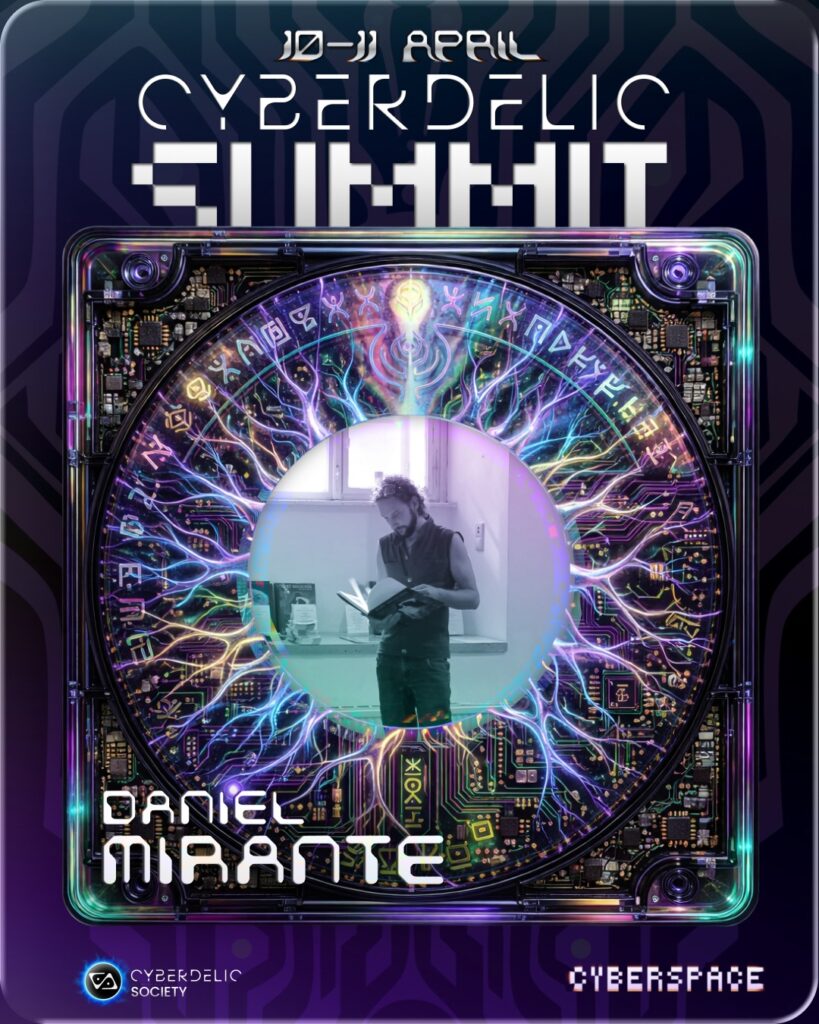
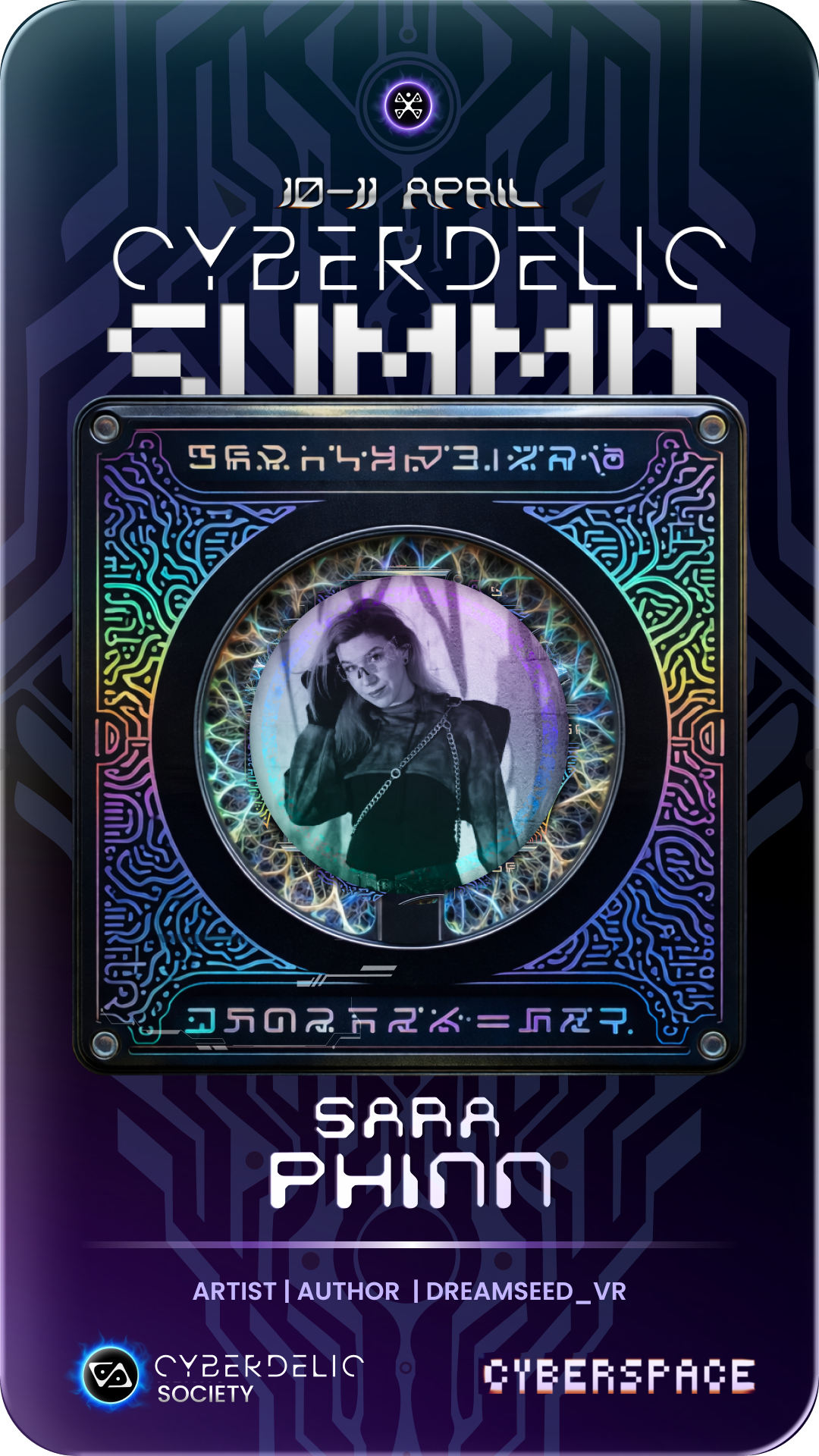
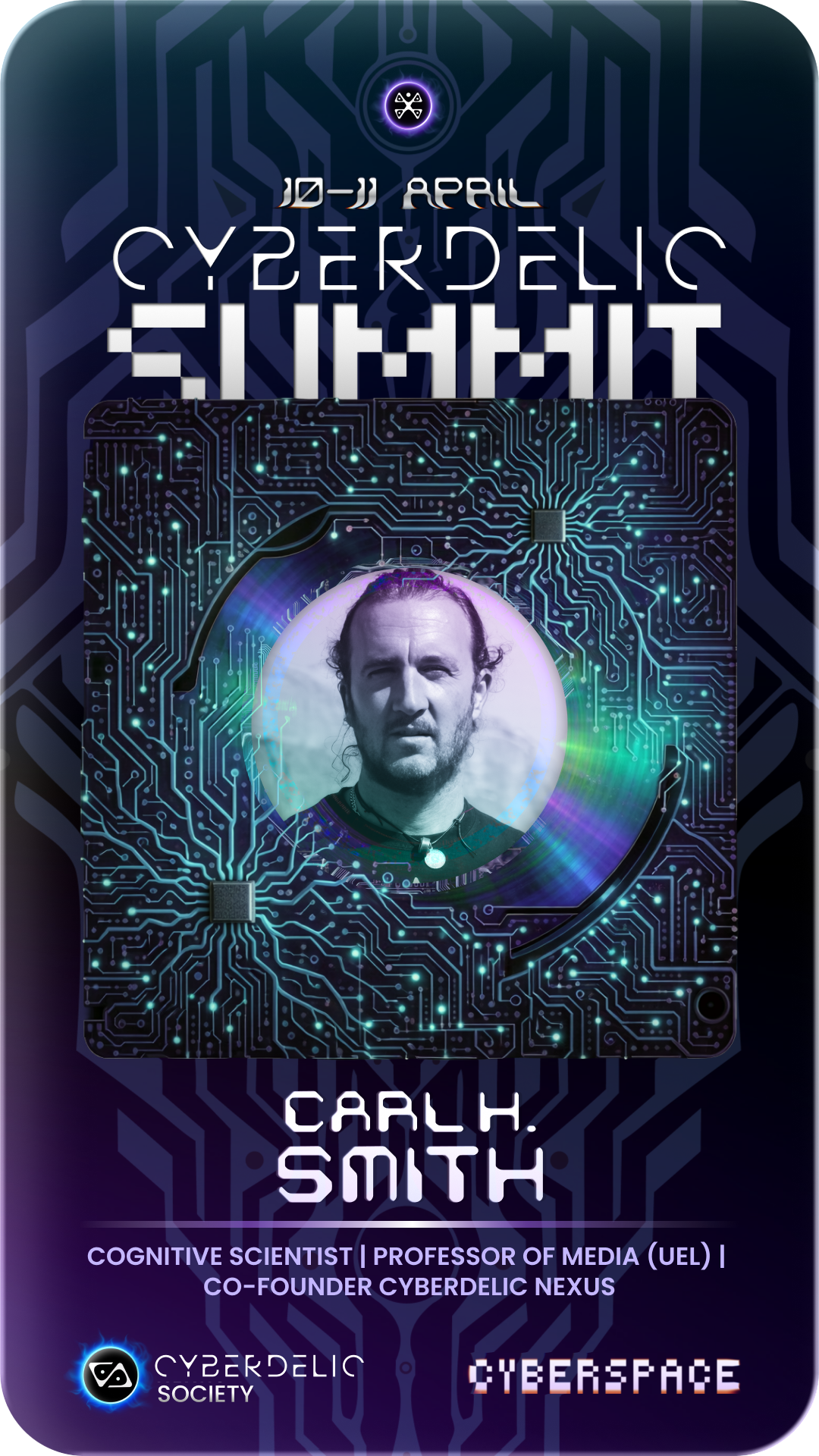
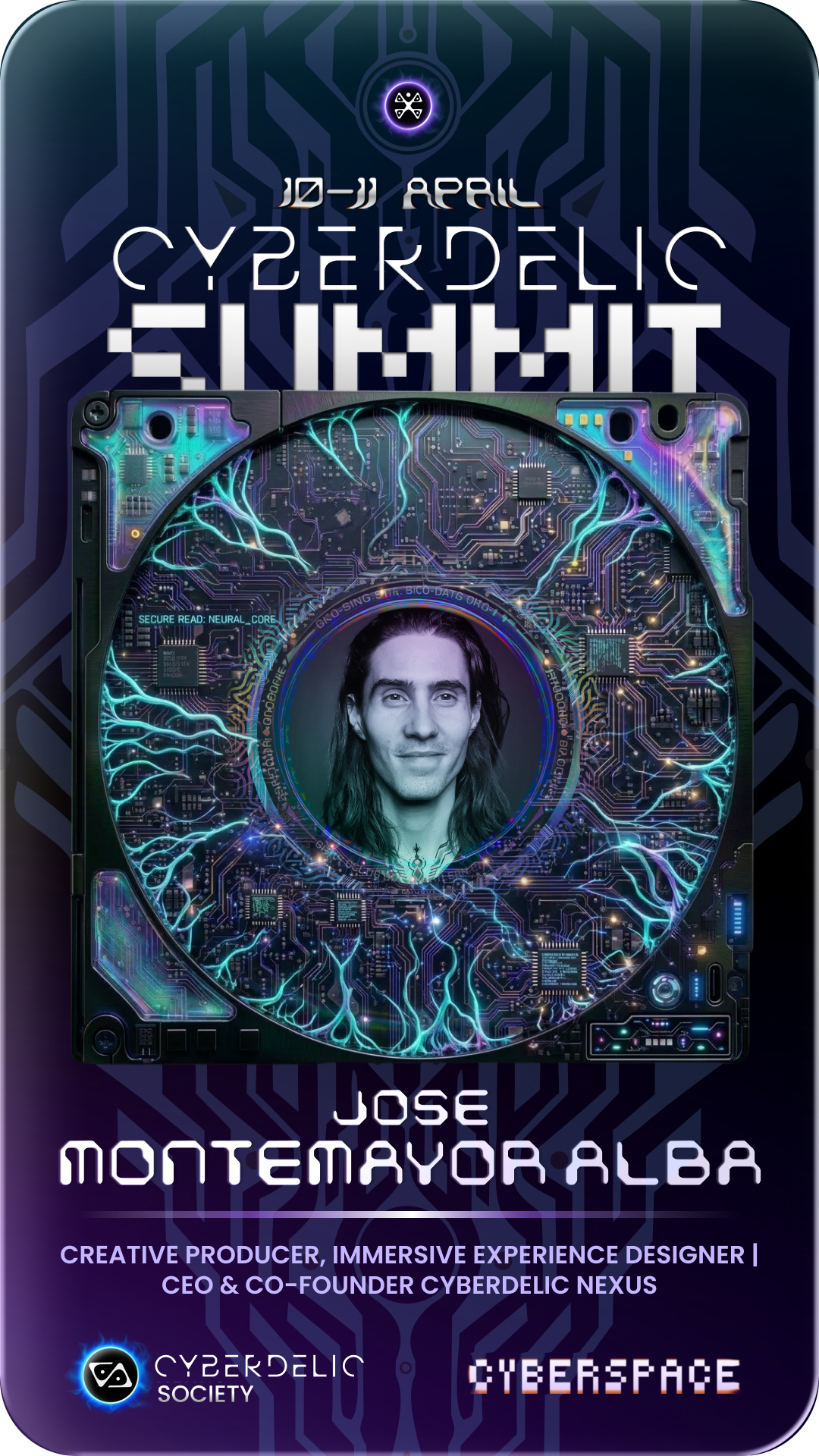
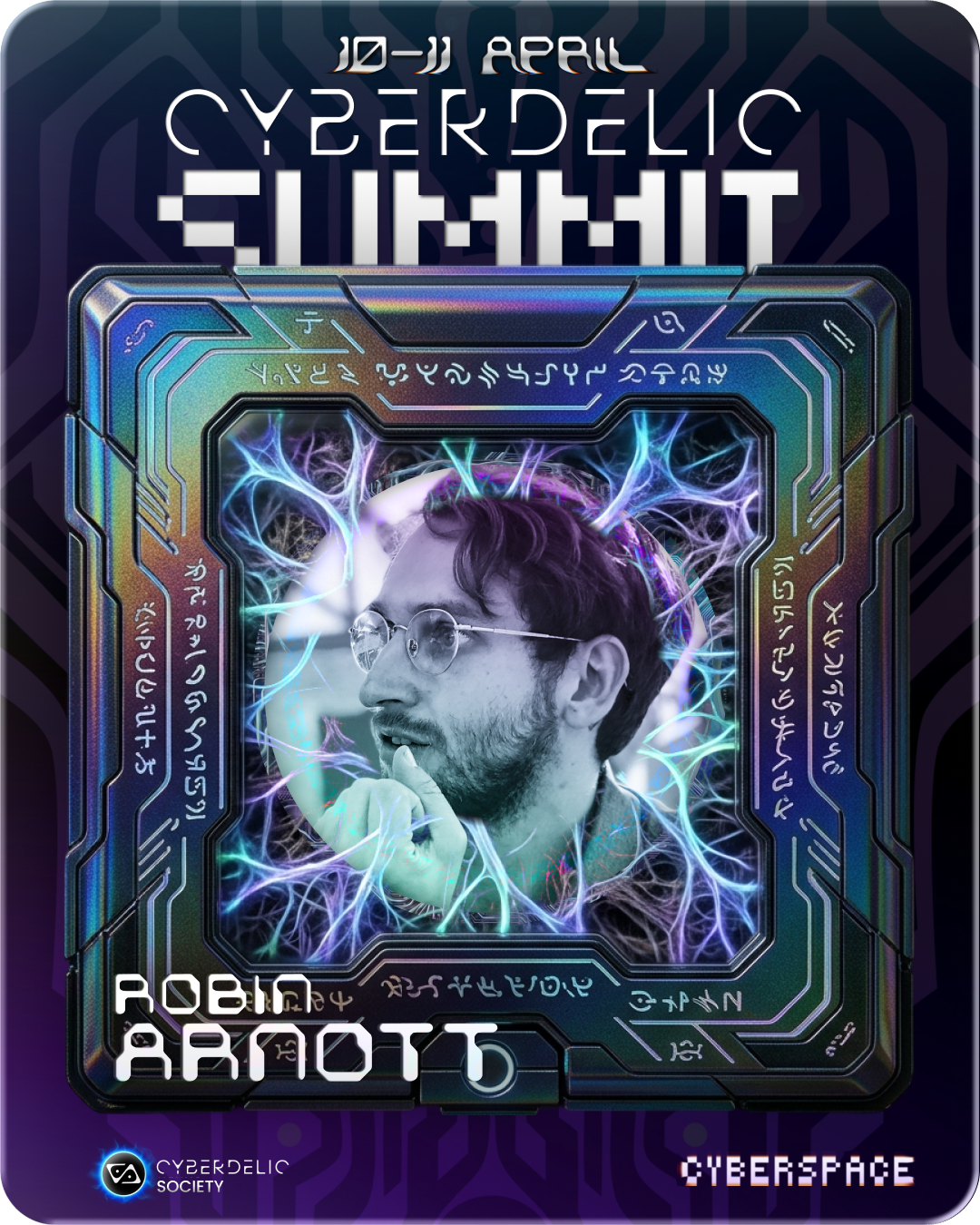
CYBERDELIC SUMMIT 2026
I presented on my work during a flash presentation at the 2026 CYBERDELIC SUMMIT. April 10–11, 2026 — a two-day virtual gathering inside Topia exploring the convergence of technology, art, science, and consciousness.
The meeting was immensely valuable because of the knowledge-level of the audience (expert level), and encouraging for how well recieved the work was.

Next Steps
Re-writing the Immersion Framework.
Footnotes
- Victor Turner, The Ritual Process (1969).
- Dacher Keltner and Jonathan Haidt, “Approaching Awe” (2003).
- Susan Leigh Star, “The Ethnography of Infrastructure” (1999).
Bibliography
Chirico, Alice, et al. 2024. “Unveiling the Underlying Structure of Awe in Virtual Reality and in Autobiographical Recall: An Exploratory Study.” Scientific Reports 14.
Conrad, Marcel, et al. 2024. “Learning Effectiveness of Immersive Virtual Reality in Education and Training: A Systematic Review of Findings.” Computers and Education Open 6.
Jongbloed, Janneke, et al. 2024. “Immersive Procedural Training in Virtual Reality: A Systematic Literature Review.” Computers & Education 218.
Lacle-Melendez, Jose, Sofia Silva-Medina, and Jorge Bacca-Acosta. 2025. “Virtual and Augmented Reality to Develop Empathy: A Systematic Literature Review.” Multimedia Tools and Applications.
McKeever, N., et al. 2024. “The Overview Effect and Nature-Relatedness.” Frontiers in Virtual Reality 5.
Vidal, J., et al. 2025. “Inducing Selflessness through a Numadelic Virtual Reality Experience.” Virtual Reality.
Yousefi, M., et al. 2024. “Advancing Prosociality in Extended Reality: Systematic Review of the Use of Embodied Virtual Agents to Trigger Prosocial Behaviour in Extended Reality.” Frontiers in Virtual Reality 5.
Tags: #immersivemedia #practicebasedresearch #VR #awe #ritualaesthetics #spatialaudio #worldbuilding #doctoralresearch