
Overview: This phase of research has been an enquiry into structural accounts of myth, narrative, and liminality, resulting in an approach to immersive design centred on how worlds reorganise perception through structured experience.
Month: November 2025
Media: Speculative fiction, sociotechnical imaginaries, myth
PhD Stage: Year 2
Key Themes: Magical realism, world-building, internal consistency, sub-creation
Category: Research Practice
Research Question: How can immersive environments be composed to support awe and transformative reflection?
Project Strand: Exploring Immersion in literature and symbolism, mythic primitives
Output: Story/Symbolism development, reflective documentation
Practice
Vladimir Propp, Joseph Campbell, Claude Lévi-Strauss, Northrop Frye, Darko Suvin, Arnold van Gennep, and Victor Turner, these thinkers identify recurrent patterns, functions, stages, oppositions, and estranging devices within cultural forms. Immersive media requires these patterns to be rethought as operative structures that can be translated into spatial, temporal, and sensory experience. Myth is being approached here as epistemic infrastructure: a way in which unfamiliar realities become thinkable, habitable, and affectively legible before they are stabilised conceptually or institutionally. This is important in the context of cyberdelic design, concerned with state-engineering, which transcends the usual tropes of optical novelty, psychedelic spectacle, or affective intensity, but involves the shaping of threshold, initiation, rupture, encounter, and return as world-structuring principles (Grau 2003; Jasanoff and Kim 2015).
The practical work during this period has consisted of comparative hermeneutics across media and time, using narrative reduction as a practice-led method for identifying what I am thinking of in terms of mythic compression patterns, design primitives, or ritual architectures. The task has been to strip away the historical technologies of a work—spaceships, magical schools, planetary empires, simulation engines, surveillance systems—in order to see what abstract movement remains.
Examples of Mythic Compression:
- The Martian / Hail Mary Project
→ A man exits the contaminated world to locate a condition of purity that can restore it - Star Wars
→ A son seeks to save the realm by redeeming his father - Blade Runner
→ An enforcer of order recognises the system’s enemy as kin - Alien
→ People cross into the unknown and encounter a disease that has destroyed a civilisation, and must purge it if they are ever to return - The Matrix
→ A man leaves the illusion to perceive the real and returns with that vision as leverage - Children of Men
→ A broken world escorts a fragile possibility of renewal through chaos to preserve the future - Harry Potter series
→ A boy carries the mark of a destructive force and must pass through death to dissolve it from within Foundation
→ A thinker encodes knowledge against collapse so that civilisation may be restored after imperial decay
These reductions are not intended as universal truths about the works, but as a way of revealing recurring epistemic gestures across cultural artefacts.
Experiments and Iterations
n/a
Artefacts and Documentation
At this stage I am systemizing design logic from primitives.
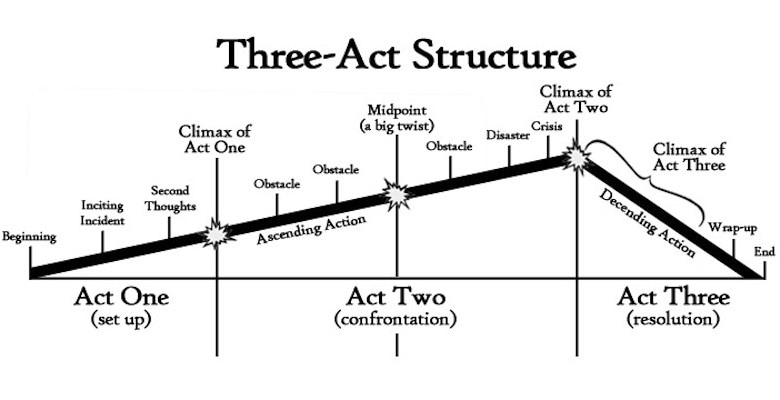
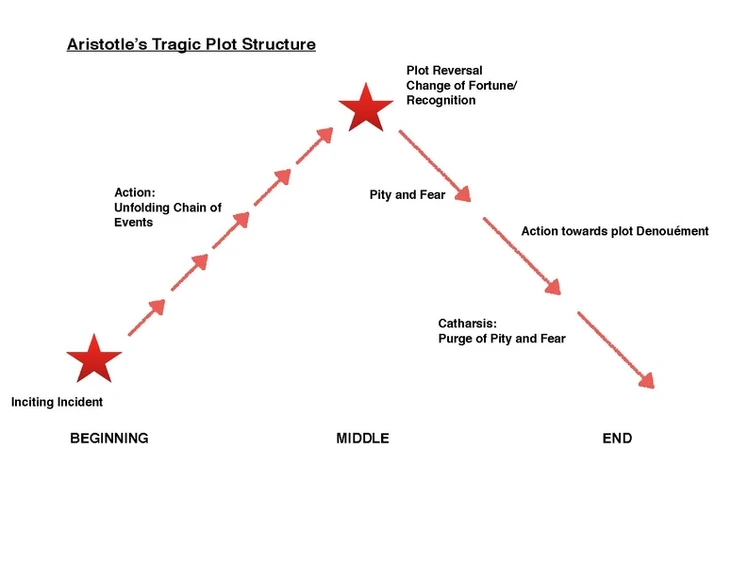
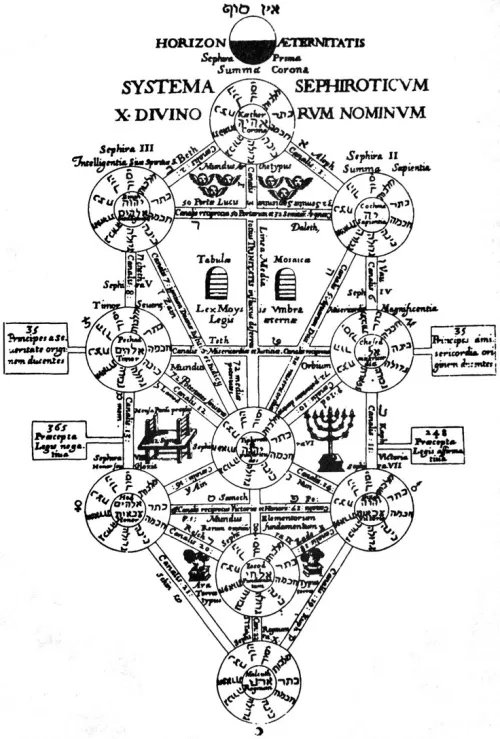
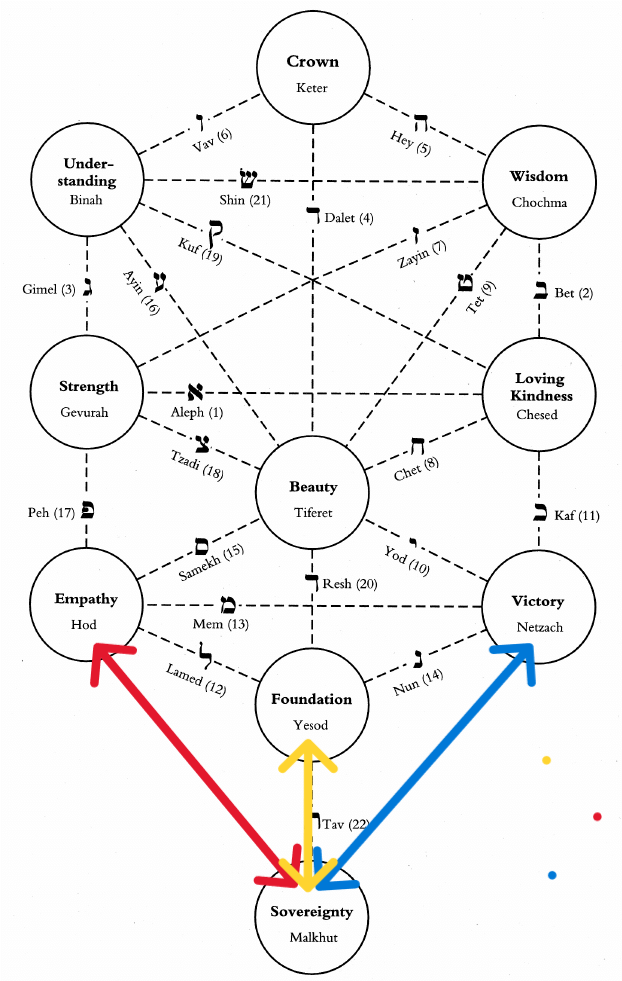
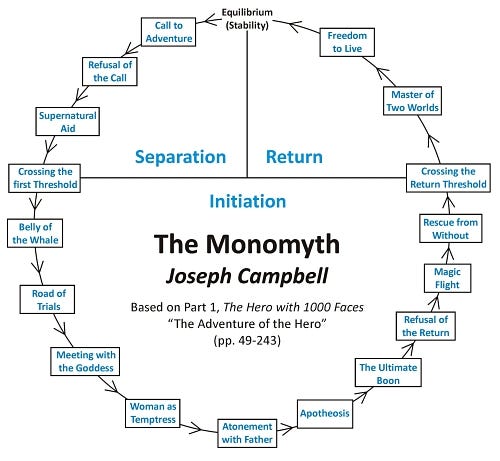
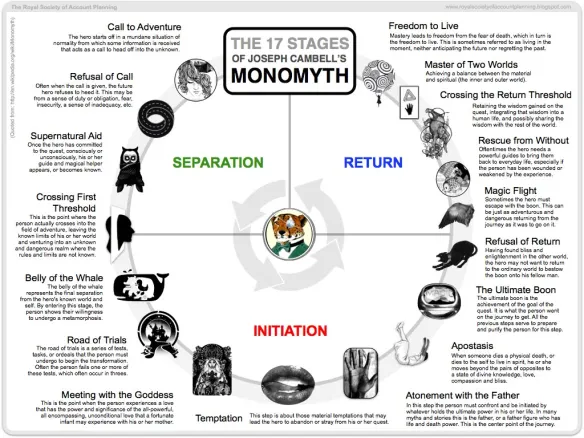
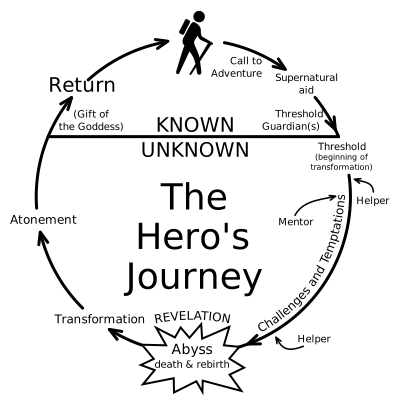
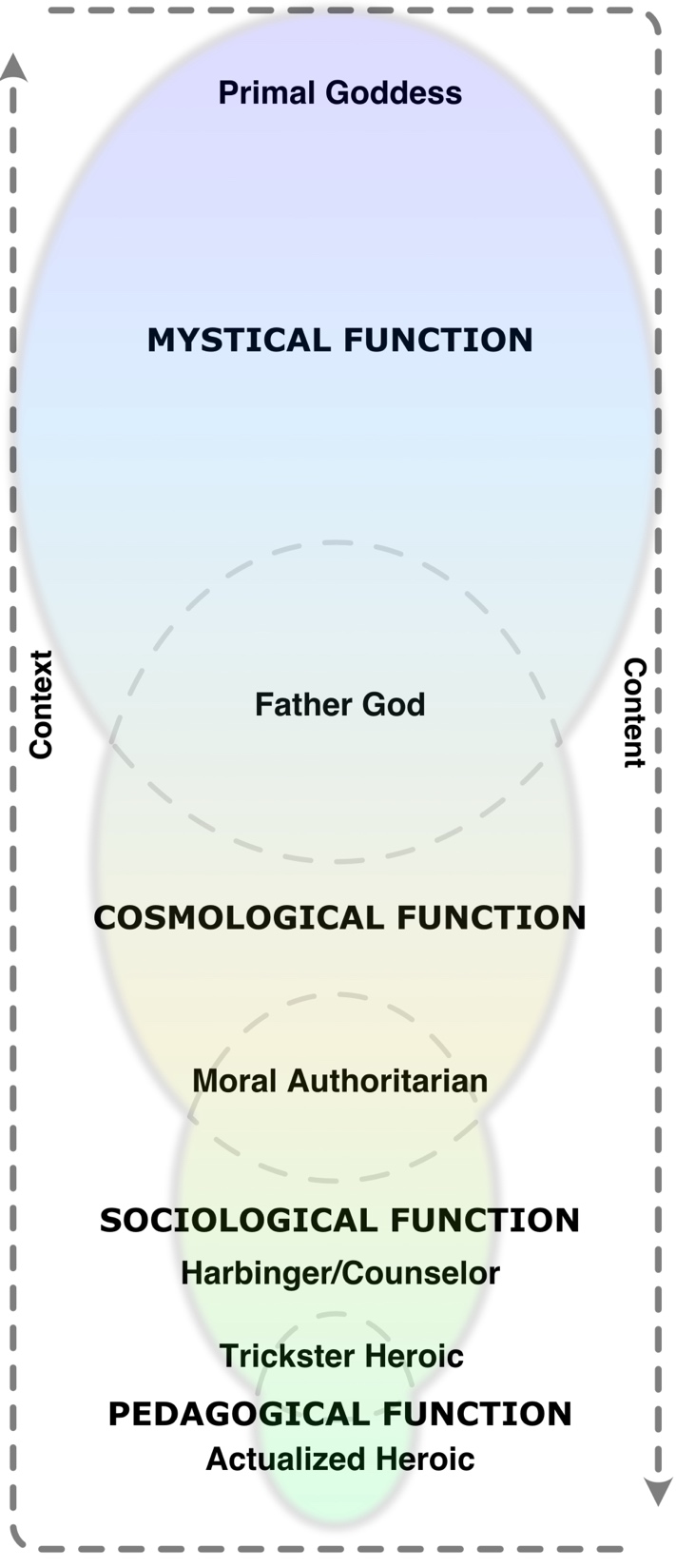
Table 1. Mythic compression patterns in contemporary sociotechnical imaginaries
| Pattern | Operation | What it does | Indicative examples | Theoretical grounding |
|---|---|---|---|---|
| Exit to purity | contamination → outside → cure | imagines salvation beyond the closed or damaged system | Project Hail Mary; Logan’s Run; The Matrix | Campbell’s departure structure; van Gennep’s separation; Suvin’s world-shift (Campbell 1949; van Gennep 1960; Suvin 1979) |
| Descent to corruption | innocence → confrontation → redemption | restores broken lineage or confronts inherited evil at its source | Star Wars; Harry Potter | Campbell’s initiation; Propp’s trial structure; Frye’s romance mode (Campbell 1949; Propp 1968; Frye 1957) |
| Burden into the zone | mark / object / obligation → passage → unmaking or transformation | materialises responsibility and gives continuity to ordeal | The Lord of the Rings; Harry Potter | Proppian function; ritual ordeal; liminal passage (Propp 1968; Turner 1969) |
| Recognition of kinship | enemy → identification → moral collapse or reorientation | collapses the boundary between pursuer and pursued | Blade Runner; Frankenstein | Lévi-Straussian relational reversal; Fryean tragic recognition (Lévi-Strauss 1955; Frye 1957) |
| Encounter with the alien | expansion → contact → horror / limit-experience | defines the limits of the human by staging radical alterity | Alien; Annihilation; Solaris | Suvin’s estrangement; mythic opposition; confrontation with alterity (Suvin 1979; Lévi-Strauss 1955) |
| Exit from illusion | ignorance → awakening → return or re-seeing | reframes reality itself as partial, false, or constructed | The Matrix; The Truman Show | Ritual separation and reincorporation; cognitive estrangement (Turner 1969; van Gennep 1960; Suvin 1979) |
| Archive against collapse | knowledge → preservation → civilisational renewal | imagines continuity through imperial or systemic breakdown | Foundation | Frye’s cyclical history; sociotechnical imaginaries of governance and continuity (Frye 1957; Jasanoff and Kim 2015) |
| Transformation through hostile ecology | entry into harsh world → adaptation → destiny reconfigured | binds selfhood to environment, ordeal, and scale | Dune | Zone logic, initiation, and world-mediated becoming (Campbell 1949; Turner 1969; Suvin 1979) |
Table 1 annotation. I treat these as comparative abstractions, not universal categories. Their value lies in showing that ostensibly different works repeatedly organise experience through a limited set of structural gestures. This is the stage at which literary or cinematic material becomes analytically useful for immersive design.
Table 2. Translation from mythic compression pattern to experiential design variables
| Operator / primitive | Spatial form | Experiential effect | Typical source patterns | Theoretical grounding |
|---|---|---|---|---|
| Container | enclosure, headset, world-frame, duration, social contract | focus, boundedness, seriousness, safety or pressure | archive, zone, initiation | Ritual enclosure and rule-bound passage (Bell 1992; Rappaport 1999) |
| Threshold / Exit | portal, fracture, descent, ascent, glitch, crossing | disorientation, anticipation, awe | exit to purity; exit from illusion | Separation and liminal crossing (van Gennep 1960; Turner 1969) |
| Zone | enclosed anomalous environment, hostile ecology, altered field | heightened attention, vigilance, immersion | encounter with the alien; transformation through hostile ecology | Estrangement, liminality, anomalous world-space (Suvin 1979; Turner 1969; Grau 2003) |
| Burden | persistent object, task, vow, mark, carried obligation | meaning-weight, continuity, consequence | burden into the zone; descent to corruption | Proppian function, ordeal, continuity through trial (Propp 1968; Turner 1969) |
| Encounter | guide, alien, machinic intelligence, guardian, emissary, interlocutor | fascination, fear, self-boundary shift | recognition of kinship; encounter with the alien | Relational structure, alterity, agentive presence (Lévi-Strauss 1955; Suvin 1979) |
| Epistemic break | reveal, rupture, contradiction, reversal, disclosure | cognitive shock, reorientation, world-model revision | exit from illusion; recognition of kinship | Estrangement and structural reversal (Suvin 1979; Frye 1957) |
| Return | re-entry, decompression, reflective overlay, aftercare sequence | integration, closure, after-effect | archive against collapse; exit from illusion | Reincorporation and ritual return (van Gennep 1960; Turner 1969) |
| Transmission | memory prompt, artefact, narrative retelling, archive, residue | persistence beyond the event, cultural uptake | archive against collapse | Cultural transmission, ritual continuity, sociotechnical inheritance (Rappaport 1999; Jasanoff and Kim 2015) |
Table 2 annotation. I separate pattern from operator because not every narrative movement translates one-to-one into a spatial device. “Exit from illusion,” for example, becomes a threshold plus epistemic break plus return. “Archive against collapse” becomes a container plus transmission. This prevents me from treating stories and immersive structures as identical things.
A minimal sequence now becomes visible. I could begin with a stability phase, in which the world is legible and internally coherent. I could then stage a threshold event—a portal, rupture, glitch, descent, or ascent. I could then bring the participant into an altered domain governed by different rules of scale, causality, or ontology. I could introduce an epistemic break that reveals the prior world as partial or constructed. Finally, I could design a return or overlay through which the earlier world is re-seen under a new understanding (van Gennep 1960; Turner 1969; Suvin 1979). This sequence is evident in many initiation narratives, but I now treat it as a compositional question for immersive practice rather than as a plot summary.
Technical and Process Notes
n/a
Critical Reflection
This approach becomes useful only if I remain clear about its status. I am not proving that all cultural works reduce to a hidden universal formula. I am using reduction to derive a limited working grammar that may help me compose and evaluate immersive environments. The strength of the method is that it gives me a way to move from myth and narrative theory toward design without collapsing into spectacle discourse or relying solely on post hoc measurement. The weakness is that the framework could become private or arbitrary if I do not keep the derivation visible and the claims modest.
I therefore treat the tables as heuristic rather than doctrinal. Their purpose is to make my deductive movement explicit: from comparative reading, to spatial translation, to practical staging. This also helps me keep cyberdelic design from drifting into a purely optical register. A threshold is not merely a flashy transition; a zone is not merely a beautiful environment; an encounter is not merely a non-player character or abstract effect. Each operator has ethical and experiential consequences, especially where initiation, vulnerability, fear, and reintegration are concerned (Bell 1992; Rappaport 1999).
Research Development
Table 3. Practice as research: from operator selection to refinement
Key description: This table states my methodology in action. I move from operator selection to design, staging, documentation, and reflection. Qualitative documentation is primary; psychometric measures remain optional and secondary.
| Research step | What I do in practice | Key questions I ask | Evidence I gather | Theoretical grounding |
|---|---|---|---|---|
| 1. I select operator(s) | I choose one or more operators from the design grammar, depending on the experiential structure I want to test | What operation do I want the work to perform: separation, ordeal, encounter, revelation, return? | design notes, sketches, concept maps | Structural function and ritual sequence (Propp 1968; van Gennep 1960; Turner 1969) |
| 2. I design the immersive sequence | I build the container explicitly: duration, norms, consent, pacing, and aftercare become part of the artwork | How do I hold the threshold? How do I avoid coercive surprise? Where does return begin? | prototypes, flow diagrams, onboarding scripts, interface studies | Ritual framing and ethical containment (Bell 1992; Rappaport 1999) |
| 3. I compose the world as operation | I engineer thresholds as care; I use rhythm, repetition, geometry, sound, and rule-shifts to steer attention | What does this scene do: separate, burden, estrange, reveal, recombine? What affordances does the environment newly allow or forbid? | scene builds, interaction logs, audiovisual documentation | Affordance and liminality (Gibson 1979; Turner 1969) |
| 4. I stage the experience | I present the work as VR, installation, ritualised encounter, or hybrid form | How does the participant move through the container? Where do hesitation, surrender, fear, or insight occur? | observation notes, participant accounts, video capture where appropriate | Immersion, passage, and enacted experience (Grau 2003; van Gennep 1960) |
| 5. I document effects | I collect qualitative responses first; I use psychometrics only where they clarify rather than flatten | Do participants report awe, disorientation, heightened attention, meaning-weight, cognitive shock, or self-boundary shift? | interviews, reflective writing, fieldnotes, optional scales | Practice-based reflection plus optional evaluative support (Bell 1992; Grau 2003) |
| 6. I reflect and refine | I compare the intended operator with the experienced one and revise the sequence accordingly | Did the threshold read as threshold? Did the encounter feel agentive? Did return integrate the work or merely stop it? | revised operator notes, design iterations, comparative reflection | Iterative practice and structural refinement (Propp 1968; Rappaport 1999) |
| 7. I track infrastructure when it fails | I pay attention to points where the apparatus, frame, or social contract becomes visible | What breaks immersion, and what does that breakdown reveal about the work’s assumptions? | bug reports, friction notes, participant confusion, breakdown analysis | Infrastructure made visible through failure (Star and Ruhleder 1996; Latour 2005) |
Table 3 annotation. This is the point at which the framework becomes methodology rather than commentary. I do not merely identify patterns in cultural works; I use those patterns to structure design decisions, stage experiences, gather evidence, and refine the operative vocabulary through practice.
This is the clearest statement of the method now emerging. I analyse sociotechnical imaginaries comparatively. I reduce them into mythic compression patterns. I translate those patterns into liminal operators. I design immersive sequences around those operators. I stage the work, document experiential effects, and revise the framework in light of what actually happens. In this sense, my research does not treat myth as literary residue, but as an active design resource for immersive environments.
Dissemination / Practice Ecology
n/a
Feedback / Peer Exchange
n/a
Next Steps
The most important pressure I apply to this work is sceptical pressure. I do not assume that pattern recognition is, by itself, an academic contribution. The tables help precisely because they force me to show my deductions and not merely announce them. They make visible where I derive a pattern, how I translate it, and how I test it. They also allow criticism. If a row is too vague, too totalising, or too private, it can be challenged and revised.
This is especially important in relation to the thinkers I cite. Propp, Campbell, Lévi-Strauss, Frye, Suvin, van Gennep, and Turner are not ornamental references. They are the intellectual ground that makes this enquiry legible as a situated development rather than a free-floating personal framework (Propp 1968; Campbell 1949; Lévi-Strauss 1955; Frye 1957; Suvin 1979; van Gennep 1960; Turner 1969).
Footnotes
n/a
Bibliography
Asimov, Isaac. 1951. Foundation. New York: Gnome Press.
Bell, Catherine. 1992. Ritual Theory, Ritual Practice. New York: Oxford University Press.
Campbell, Joseph. 1949. The Hero with a Thousand Faces. New York: Pantheon.
Frye, Northrop. 1957. Anatomy of Criticism: Four Essays. Princeton, NJ: Princeton University Press.
Gibson, James J. 1979. The Ecological Approach to Visual Perception. Boston: Houghton Mifflin.
Grau, Oliver. 2003. Virtual Art: From Illusion to Immersion. Cambridge, MA: MIT Press.
Herbert, Frank. 1965. Dune. Philadelphia: Chilton Books.
Jasanoff, Sheila, and Sang-Hyun Kim, eds. 2015. Dreamscapes of Modernity: Sociotechnical Imaginaries and the Fabrication of Power. Chicago: University of Chicago Press.
Latour, Bruno. 2005. Reassembling the Social: An Introduction to Actor-Network-Theory. Oxford: Oxford University Press.
Lévi-Strauss, Claude. 1955. “The Structural Study of Myth.” Journal of American Folklore 68 (270): 428–44.
Propp, Vladimir. 1968. Morphology of the Folktale. 2nd ed. Translated by Laurence Scott. Austin: University of Texas Press.
Rappaport, Roy A. 1999. Ritual and Religion in the Making of Humanity. Cambridge: Cambridge University Press.
Rowling, J. K. 1997. Harry Potter and the Philosopher’s Stone. London: Bloomsbury.
Scott, Ridley, dir. 1979. Alien. Los Angeles: Twentieth Century-Fox.
Scott, Ridley, dir. 1982. Blade Runner. Burbank, CA: Warner Bros.
Star, Susan Leigh, and Karen Ruhleder. 1996. “Steps toward an Ecology of Infrastructure: Design and Access for Large Information Spaces.” Information Systems Research 7 (1): 111–34.
Suvin, Darko. 1979. Metamorphoses of Science Fiction: On the Poetics and History of a Literary Genre. New Haven, CT: Yale University Press.
Tolkien, J. R. R. 1954–55. The Lord of the Rings. London: George Allen and Unwin.
Turner, Victor. 1969. The Ritual Process: Structure and Anti-Structure. Chicago: Aldine.
van Gennep, Arnold. 1960. The Rites of Passage. Translated by Monika B. Vizedom and Gabrielle L. Caffee. Chicago: University of Chicago Press.
Wachowski, Lana, and Lilly Wachowski, dirs. 1999. The Matrix. Burbank, CA: Warner Bros.
Weir, Peter, dir. 1998. The Truman Show. Los Angeles: Paramount Pictures.
Tags: #immersivemedia #practicebasedresearch #VR #awe #ritualaesthetics #spatialaudio #worldbuilding #doctoralresearch